

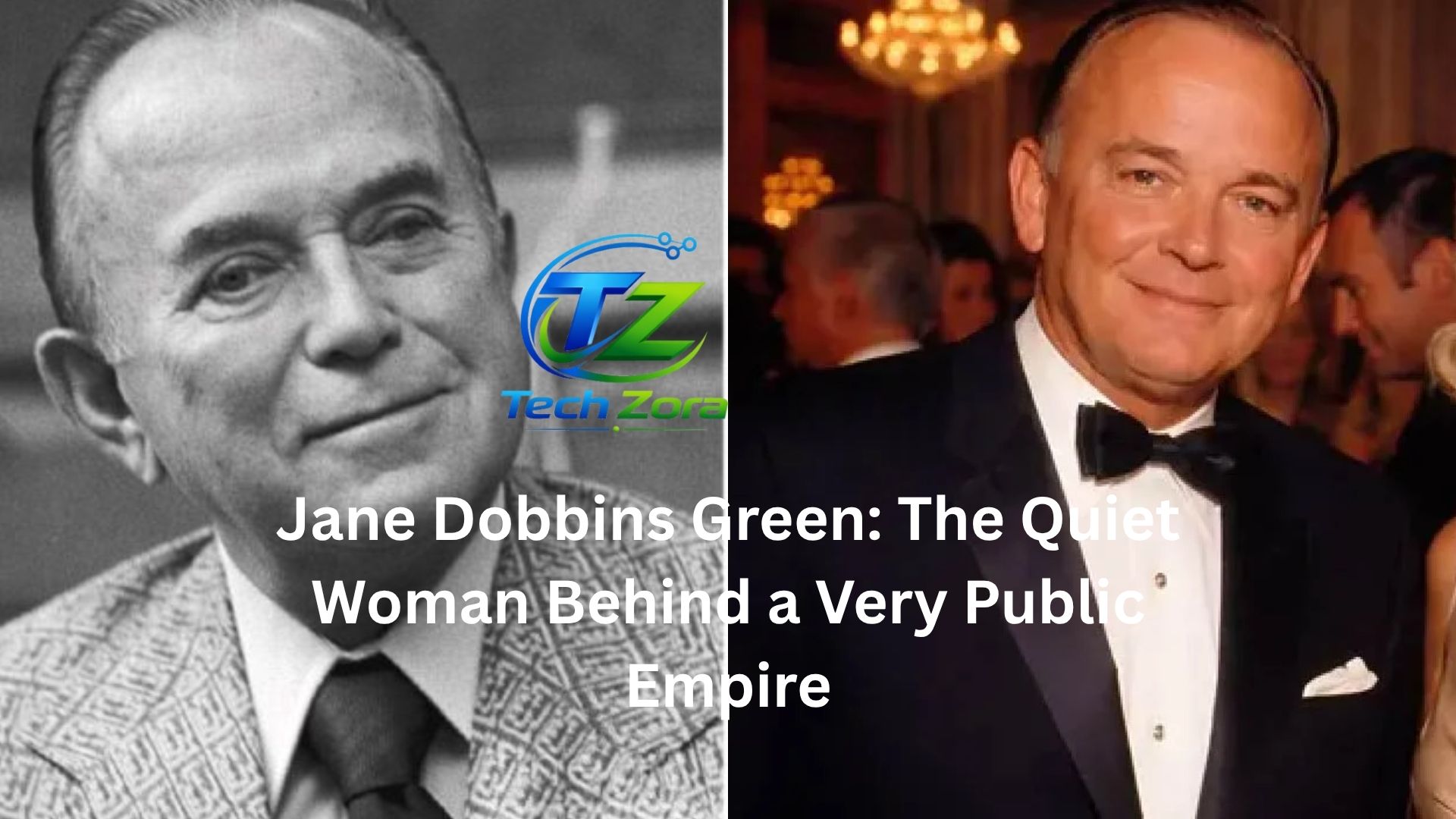
Most people who search for Jane Dobbins Green are really searching for a piece of the Ray Kroc story. That’s understandable. Kroc helped turn McDonald’s into one of the biggest business empires on earth, and anyone connected to him tends to get pulled into that spotlight.
But here’s the thing. Jane Dobbins Green wasn’t a celebrity chasing attention. In fact, the little that’s publicly known about her suggests the exact opposite. She lived quietly, stayed mostly out of interviews, and never tried to build a public identity around the man she married.
That alone makes her interesting.
We live in a time where almost everybody leaves a digital footprint behind. Jane Dobbins Green didn’t. Even today, details about her life are scattered, inconsistent, and surprisingly thin. That mystery has made people even more curious.
And honestly, there’s something refreshing about a person who stayed private while standing next to massive fame.
A Life That Mostly Stayed Off the Record
Jane Dobbins Green was born in Walla Walla, Washington, in 1911, according to several biographical sources.
That date places her in a completely different America. Long before social media. Long before fast-food corporations became cultural symbols. Long before business founders turned into public personalities with documentaries and fan followings.
She came from an era where many women lived meaningful lives without ever becoming publicly documented.
That’s important context.
A lot of modern readers expect every historical figure to have a detailed timeline online. But for someone like Jane Dobbins Green, privacy was normal. Especially for women who weren’t entertainers or politicians.
Some reports say she worked as a secretary for John Wayne before marrying Ray Kroc.
Now, imagine that for a second.
Hollywood in the mid-20th century was loud, ambitious, and heavily male-dominated. Being close to powerful figures while remaining personally reserved probably required a certain personality type. Calm. Observant. Discreet.
People often underestimate how valuable those traits are.
Not everybody wants to be the loudest person in the room.
Her Marriage to Ray Kroc Changed Public Interest in Her Forever
Jane Dobbins Green became Ray Kroc’s second wife in 1963.
That timing matters.
Kroc was already deeply involved in expanding McDonald’s, but he wasn’t yet the larger-than-life business icon many people know today. He was in transition. Ambitious. Driven. Relentlessly focused.
By most accounts, he was also difficult to live with.
That’s not even criticism. A lot of highly driven entrepreneurs become consumed by work. Their schedules stop making sense. Their attention narrows. Everything becomes tied to growth, momentum, and the next deal.
Anyone who has ever lived with a work-obsessed person understands the strain that creates.
You can picture the dynamic pretty easily. One partner trying to build an empire while the other tries to maintain something resembling a normal life.
Their marriage lasted about five years before ending in divorce in 1968.
Compared to Kroc’s other relationships, Jane often gets reduced to a “middle chapter.” But that framing misses something important.
She was there during a crucial turning point in his life.
Not during the struggling salesman years. Not during the billionaire legacy years. Right in the middle, when ambition was accelerating and personal relationships were becoming more complicated.
That period tends to reveal people’s real character.
The Strange Reality of Being Connected to Fame
There’s a pattern you see with certain historical figures. One person becomes famous, and suddenly everyone around them becomes searchable.
Spouses. Children. Old friends. Former assistants.
Sometimes those people wanted attention. Sometimes they absolutely didn’t.
Jane Dobbins Green appears to fall into the second category.
Even decades later, most articles about her are built around the same handful of facts. That usually means the person intentionally avoided publicity.
And honestly, that’s probably harder than it sounds.
Think about how many people today willingly attach themselves to public figures for visibility. Podcasts, interviews, social media appearances, memoirs. Modern culture rewards exposure.
Jane never really played that game.
That restraint gives her story a different tone. More human. Less polished.
Living Beside Ambition Isn’t Easy
One of the more interesting parts of Jane Dobbins Green’s story isn’t directly about her. It’s about what happens to relationships when one person becomes consumed by success.
Ray Kroc had an almost legendary reputation for persistence. He worked constantly. He expanded aggressively. He chased growth with near obsessive intensity.
That level of ambition usually comes with trade-offs.
People like to celebrate the success part afterward. Fewer people talk about the emotional cost while it’s happening.
There’s a reason so many biographies of major business founders include strained marriages somewhere in the timeline.
Picture a simple scenario.
One person comes home still mentally inside meetings, negotiations, expansion plans, numbers, projections. The other person wants presence, conversation, ordinary connection.
Over time, those worlds drift apart.
We obviously can’t know every detail of Jane and Ray’s private life. But the broader pattern feels familiar because it happens all the time, even outside billionaire business stories.
Just smaller versions of it.
A local business owner working 16-hour days. A startup founder glued to their phone during dinner. A lawyer who never fully leaves the office mentally.
Ambition can be exciting. It can also be exhausting for everybody nearby.
Why People Still Search for Jane Dobbins Green
Part of the fascination comes from mystery.
There’s no massive archive of interviews. No bestselling memoir. No dramatic television appearances.
And weirdly, that absence makes people more curious.
The internet has trained us to expect constant visibility. When someone remains difficult to define, it creates intrigue.
But there’s another reason people keep searching for her name.
She represents the quieter side of famous histories.
Business stories usually focus on founders, profits, deals, and public victories. The people standing beside those moments often disappear into footnotes. Yet they still lived through the pressure, instability, and emotional chaos attached to those years.
Jane Dobbins Green reminds people that history isn’t only shaped by the loudest personalities.
Sometimes the quieter figures tell us more.
She Chose Privacy Over Public Legacy
After divorcing Ray Kroc, Jane largely disappeared from public attention. Some reports say she later married Paul D. Whitney and remained with him until her death in 2000.
What stands out is how little she seemed interested in revisiting the McDonald’s story publicly.
No endless interviews about her famous ex-husband.
No attempts to cash in on association.
No public bitterness campaign.
Just distance.
That decision feels increasingly rare now.
Modern culture often encourages people to turn every personal connection into content. Jane Dobbins Green belonged to a generation that still believed some things could stay private.
And maybe there’s wisdom in that.
Not every relationship has to become public property just because one person became famous.
The Human Side of Historical Footnotes
It’s easy to flatten people into labels.
“Ray Kroc’s second wife.”
That’s technically accurate. But it’s also incomplete.
Every person has a full emotional world outside the headline attached to them. Daily routines. Private worries. Small joys. Regrets. Friendships. Quiet moments nobody records.
Jane Dobbins Green likely experienced all of that while history mostly remembered the man beside her.
That happens more than people realize.
History tends to spotlight builders, founders, and public personalities. The quieter people nearby become background scenery, even when they were deeply involved in the emotional reality of those years.
There’s something worth remembering there.
Not everybody who matters becomes famous.
Why Her Story Still Connects With Readers
At first glance, Jane Dobbins Green might seem like a minor historical figure connected to a larger celebrity story.
But the reason people continue searching for her isn’t really about fast food or corporate history.
It’s about curiosity around private lives lived near massive success.
People want to understand what those relationships looked like behind closed doors. What it felt like to stand beside someone relentlessly ambitious. Why some individuals embrace fame while others quietly walk away from it.
Jane’s story also taps into something modern readers increasingly appreciate: authenticity.
She didn’t build a public brand. She didn’t market herself as part of the McDonald’s legacy. She simply lived her life as privately as possible.
That choice gives her story a different texture than most modern celebrity narratives.
Less noise. More mystery.
And sometimes mystery lasts longer than publicity ever does.




Leave a Reply