

A name you hear in passing, but rarely in full view
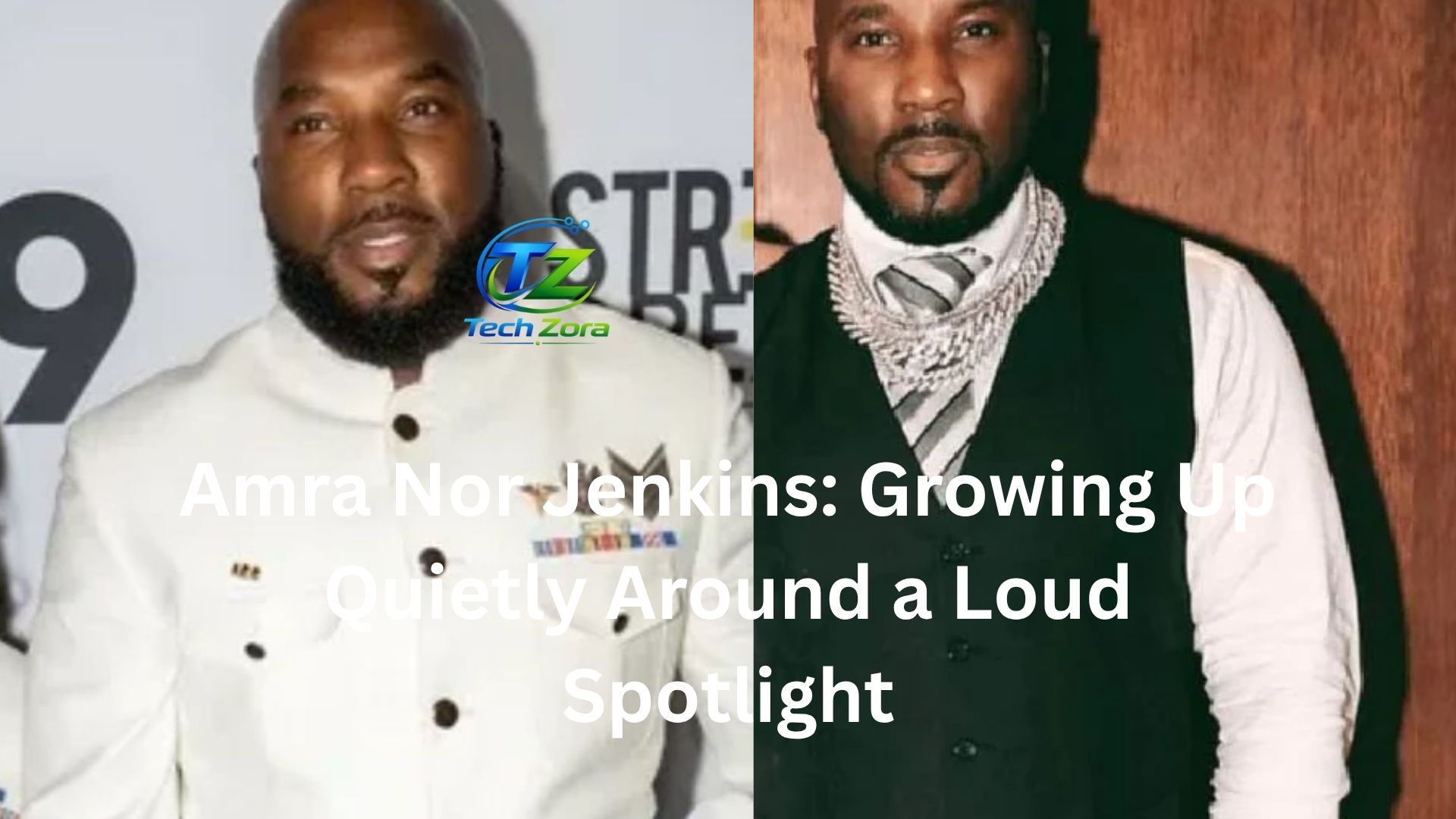
Amra Nor Jenkins isn’t a name that shows up everywhere, yet it carries a quiet familiarity if you’ve followed hip-hop culture or celebrity family circles for a while. She’s the daughter of rapper Jeezy (Jay Wayne Jenkins), a figure who has spent decades in the public eye. And that alone puts her in an unusual position—close enough to fame to be recognized, but far enough to still be mostly shielded from it.
Here’s the thing about celebrity children: they don’t choose the spotlight, but they often inherit its glare anyway. Some grow up fully visible, with every milestone documented. Others are intentionally kept out of frame, their lives unfolding more privately, almost like a parallel world running beside the public story.
Amra belongs much more to the second category.
And that shapes everything about how people perceive her—even when there’s not much visible to perceive.
The space between public fame and private childhood
Let’s be honest: it’s easy to forget that behind every familiar celebrity name is a normal family structure trying to function in abnormal conditions. School runs, birthdays, routines, quiet weekends—these things don’t stop just because one parent is a public figure.
With Amra Nor Jenkins, what stands out most is the deliberate distance between her life and the media cycle. There aren’t constant interviews or staged appearances. No carefully curated “child influencer” presence. Just a low-profile approach that feels intentional rather than accidental.
That choice matters more than it looks like on the surface.
In a world where attention can be monetized instantly, privacy becomes a kind of protection. Not just from public scrutiny, but from the distortion that comes with it. Because once a child becomes “content,” their life stops being just their own experience and starts becoming a narrative others control.
And that’s where Amra’s story—at least the part the public can see—quietly diverges from the norm.
You can imagine it in small, ordinary ways. A school event where nobody’s filming. A birthday party with just family and close friends instead of a social media rollout. The kind of moments that don’t get archived online but still form the backbone of childhood.
A father’s public world and a daughter’s private one
Jeezy’s career is no small backdrop. He’s been a major voice in hip-hop, especially in the mid-2000s and beyond, known for music that blends street realism with motivational themes. With that level of visibility comes interviews, tours, business ventures, and a constant public presence that doesn’t really switch off.
But fatherhood, especially for public figures, often runs on a different track entirely.
There’s a natural tension there. One life is built on exposure; the other thrives on discretion. And managing that divide isn’t always clean or easy. What gets shared publicly is usually selective, controlled, and minimal when it comes to children.
Amra Nor Jenkins sits at that intersection.
It’s not unusual to see celebrities talk about wanting their children to have normal lives. The challenge is that “normal” becomes a moving target. For a child connected to fame, normal doesn’t mean invisible—but it often means carefully buffered from unnecessary attention.
And that buffering shows up in subtle ways. Limited public appearances. Minimal social media exposure. A general absence from the celebrity news cycle unless directly relevant to family mentions.
It creates a kind of quiet perimeter around her life.
Why people are curious anyway
Even with limited visibility, curiosity fills the gaps. That’s just human nature. When information is scarce, speculation tends to grow in its place.
But Amra Nor Jenkins isn’t a public figure in the traditional sense, and that distinction matters. Her name appears mostly in relation to her father, which means public interest is inherited rather than self-generated.
Still, people tend to wonder: what is it like growing up in that environment? Does it feel normal, or does it always feel slightly removed from everyone else’s experience?
The truth is, it’s probably both.
There’s a kind of duality that often comes with celebrity families. On one hand, access to opportunities, travel, and experiences that might not be common otherwise. On the other, a constant awareness that privacy isn’t automatically guaranteed if boundaries aren’t set early and consistently.
And when those boundaries are respected—as they seem to be here—the result is often a childhood that feels more grounded than outsiders might assume.
It doesn’t erase the uniqueness of the situation, but it does soften the edges.
The broader picture: kids of celebrities in a digital world
Now, zoom out a bit.
Amra Nor Jenkins isn’t an isolated case. She’s part of a broader shift in how celebrity children are being raised in the age of social media. A decade or two ago, visibility was mostly controlled by magazines, paparazzi, and televised interviews. Today, the camera is everywhere, and the audience is constant.
That changes parenting decisions in a big way.
Some families embrace visibility early, turning it into branding or media presence. Others go in the opposite direction, treating privacy as something to defend aggressively.
Neither approach is perfect, and both come with trade-offs. But the trend toward protecting children from overexposure has become more noticeable in recent years, especially among high-profile entertainers.
There’s a simple logic behind it. Childhood isn’t something you can redo. Once it’s publicly documented in detail, it stays that way permanently.
So in cases like Amra’s, what stands out isn’t just who her father is—it’s what isn’t being shown.
That absence is intentional. And in a strange way, it speaks louder than constant visibility ever could.
Growing up adjacent to fame, not inside it
There’s a difference between being famous and being adjacent to fame.
Being famous means your identity is publicly shaped. People recognize you, talk about you, build narratives around you.
Being adjacent to fame is more complicated. You exist near the center of attention, but you’re not the focal point. You might be known in certain contexts, but your daily life doesn’t revolve around public recognition.
For Amra Nor Jenkins, that distinction likely defines her experience more than anything else.
Think about the contrast: a parent on stage, performing to thousands, while the child’s world is focused on school, friends, and family routines. Two realities existing at once, occasionally overlapping, but mostly separate.
That separation can be healthy when maintained well. It allows a child to develop identity without the pressure of public expectation.
And that’s not a small thing.
Because identity formation is messy enough without an audience.
What people often miss about celebrity families
There’s a tendency to romanticize celebrity life from the outside. The assumption is usually that everything is easier—more comfort, more access, fewer struggles.
But that view leaves out the complexity.
Yes, there can be privilege. But there’s also visibility pressure, trust issues around privacy, and the challenge of figuring out who genuinely sees you versus who sees your last name.
For children like Amra Nor Jenkins, the goal from the adult side is often stability. Not spectacle. Not branding. Just a stable environment where normal development isn’t overshadowed by outside noise.
And stability doesn’t look dramatic. It doesn’t generate headlines. It mostly looks like ordinary routines repeated over time.
School days. Family time. Friends who know you as a person first, not a name.
That kind of consistency is easy to overlook, but it’s usually what matters most.
A quiet kind of relevance
There’s something interesting about names like Amra Nor Jenkins becoming known even without active public participation. It shows how fame extends beyond individuals and into families, creating ripples that don’t always ask permission.
But not every name attached to a public figure needs to become a public figure itself.
In fact, some of the most balanced outcomes happen when that line is respected. When recognition exists without exposure. When curiosity doesn’t automatically translate into intrusion.
That balance is fragile, though. It depends on intention, consistency, and a shared understanding that not everything has to be shared to be valid.
And in Amra’s case, the limited public presence suggests that line is being drawn carefully.
The takeaway behind the silence
Amra Nor Jenkins represents something subtle but important in modern celebrity culture: the idea that visibility isn’t mandatory, even when attention is available.
There’s no grand narrative here, no forced storyline. Just a life that exists near fame without being consumed by it.
And maybe that’s the most grounded way to think about it. Not as a figure defined by public detail, but as a reminder that privacy is still possible, even in spaces where it feels increasingly rare.
In the end, what stands out isn’t what’s known about her. It’s what isn’t.
And sometimes, that says more than enough.








Leave a Reply