

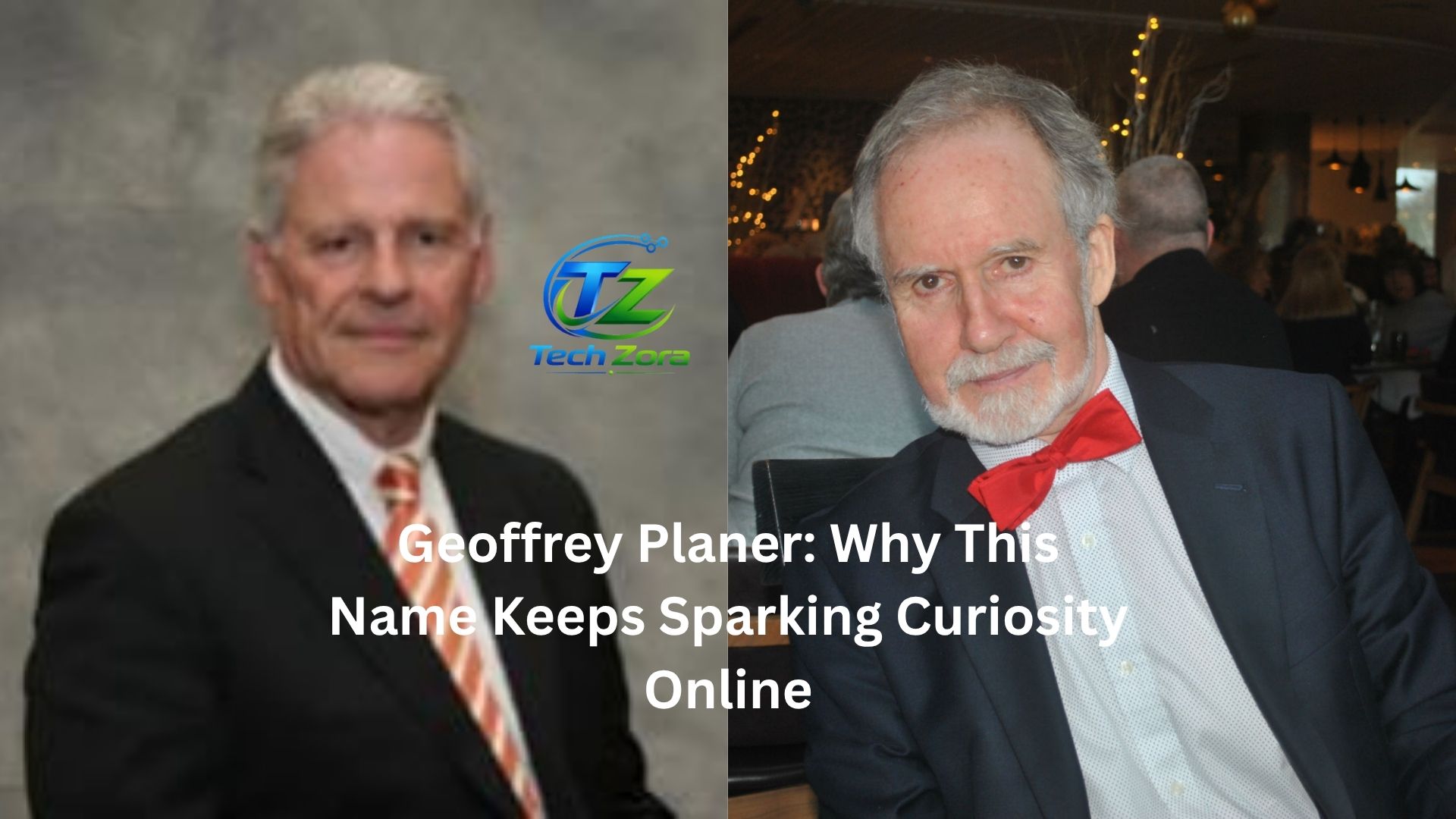
Some names show up once and disappear. Others quietly stick around in search bars, forums, and random conversations for years. Geoffrey Planer falls into that second category.
The interesting part is that there isn’t a huge public celebrity profile attached to the name. No blockbuster headlines. No nonstop media machine. Yet people keep looking it up. That alone says something.
Curiosity on the internet works in strange ways. Sometimes a person becomes interesting not because they’re constantly visible, but because information about them feels just out of reach. Geoffrey Planer has that kind of digital presence — recognizable enough to search, mysterious enough to keep people digging.
And honestly, that’s become more common than most people realize.
The internet changed how we think about names
Years ago, a person’s reputation mostly lived in local circles. Coworkers knew them. Neighbors knew them. Maybe a few industry contacts did too. That was enough.
Now a name can travel without context.
You hear it once during a conversation. You see it attached to a business document. Maybe it appears in a social media thread or an old article. Ten seconds later, someone’s typing it into Google.
That’s probably part of what’s happening with Geoffrey Planer.
People search names for all kinds of reasons:
- professional curiosity
- networking
- old connections
- business research
- simple human nosiness
Let’s be honest, sometimes people just want to know if someone from twenty years ago ever showed up online.
A name search has become the modern equivalent of asking around town.
Why some names become “searchable”
There’s an interesting pattern with names that repeatedly appear online despite limited mainstream exposure. Usually, those names are tied to professional circles, local influence, niche industries, or older records that continue floating around the web.
Geoffrey Planer feels like one of those cases.
Not everyone who gets searched online is famous in the traditional sense. In fact, most aren’t. Some simply leave enough traces behind to create curiosity.
Think about how this works in real life.
You’re sitting with coworkers after a meeting. Someone casually mentions a person who “used to be involved in that project years ago.” Nobody remembers the details, but the name sticks. By the time lunch ends, three people have already searched it.
That’s modern curiosity in action.
And once a name gets searched repeatedly, search engines start noticing.
Digital footprints are stranger than people think
A lot of people assume their online presence is either huge or nonexistent. Reality sits somewhere in the middle.
Most individuals have fragmented digital footprints:
- an old business listing
- a mention in a newsletter
- archived public records
- a forgotten interview
- a social profile that hasn’t been updated in years
Together, those scattered pieces create a searchable identity.
That may explain why Geoffrey Planer continues to appear in online searches even without a giant public-facing profile.
Here’s the thing: the internet rarely forgets partial information.
Even small references can survive for decades. A single archived mention from years ago can continue appearing in search results long after the original context disappears.
That’s why researching people online often feels oddly incomplete. You find fragments instead of a full picture.
The fascination with low-profile public figures
There’s actually something refreshing about people who aren’t constantly branding themselves online.
Today, everybody seems expected to become a personal marketing machine. Daily posts. Constant updates. Professional storytelling. Endless visibility.
Not everyone wants that.
Some people maintain careers, networks, and influence without turning themselves into internet personalities. When that happens, curiosity naturally increases because there’s less easy information available.
Geoffrey Planer appears to fit into that category — someone whose name circulates enough to attract attention, but without the oversized digital presence people now expect.
Oddly enough, that can make a person more interesting.
Scarcity creates intrigue. It always has.
Search culture has made everyone a researcher
Twenty years ago, researching someone took effort. You had to make calls, visit libraries, or know the right people.
Now it takes six seconds.
That shift changed human behavior more than most people realize.
People routinely search:
- former classmates
- business associates
- property owners
- authors
- speakers
- professionals
- names seen in legal or corporate documents
The habit has become automatic.
So when people search Geoffrey Planer, it doesn’t necessarily mean there’s controversy or fame attached to the name. Sometimes it simply means the name crossed someone’s path.
And once a few people start searching, others follow.
Search engines amplify curiosity.
A name doesn’t need celebrity status anymore
This is one of the biggest misconceptions online. People assume only celebrities generate search interest.
That stopped being true years ago.
Local business figures, consultants, investors, attorneys, academics, former executives, and niche professionals often develop strong search visibility despite having little mainstream recognition.
Why?
Because relevance matters more than fame now.
If a person intersects with enough industries, organizations, or public records, their name naturally gains search traction over time.
Geoffrey Planer may be an example of exactly that kind of modern visibility — recognizable within certain circles while remaining relatively unknown to the broader public.
That middle ground creates a lot of online curiosity.
The mystery factor matters more than people admit
People are naturally drawn to incomplete stories.
You can see this everywhere. A half-finished documentary. An abandoned building. An unexplained historical photo. A person whose name appears often but without obvious details.
Our brains want closure.
That’s probably another reason searches for Geoffrey Planer continue happening. When information feels partial, people keep looking for the missing piece.
And the internet rarely provides a satisfying ending.
You click one result. Then another. Then an archived page from years ago. Suddenly twenty minutes disappear.
Everybody’s done this at some point.
Professional identity online is messy
One thing worth remembering is that online information is often outdated, fragmented, or misleading.
A person may have changed careers years ago while old profiles remain active. Companies close. Projects disappear. Links break. Articles get removed.
Yet search results stay alive.
That creates strange situations where people appear more publicly active online than they really are.
Or the opposite happens. Someone may have had significant influence in a professional field but left behind almost no digital footprint because much of their work happened before modern internet culture exploded.
Geoffrey Planer could easily fall into that category as well.
A lot of established professionals built careers before personal branding became mandatory.
Why people trust search results too much
Here’s something worth saying clearly: search visibility doesn’t equal importance, accuracy, or relevance.
People often assume that if a name appears online repeatedly, they’re seeing the complete story. Usually they aren’t.
Search engines reward:
- repeated mentions
- indexed records
- linked references
- archived pages
They don’t necessarily reward context.
That’s why researching people online can feel oddly distorted. Some individuals have massive digital footprints with little substance behind them. Others have substantial real-world accomplishments but barely appear online at all.
The internet isn’t a balanced mirror of reality.
It’s more like a giant filing cabinet somebody shook violently.
The human side of online curiosity
At its core, searching a name is a very human behavior.
People want context. Connection. Recognition.
Sometimes they’re trying to remember where they heard the name before. Sometimes they’re verifying information before a meeting. Other times they’re reconnecting with a past chapter of their lives.
A simple search can trigger memories surprisingly fast.
You type in a name from years ago and suddenly remember an office, a city, a conversation, or even a specific moment you thought you forgot.
That emotional side of search culture doesn’t get discussed enough.
Not every name lookup is investigative. Sometimes it’s nostalgic.
Geoffrey Planer and the modern internet puzzle
What makes Geoffrey Planer interesting isn’t necessarily a massive public profile. It’s the opposite.
The name exists in that uniquely modern space where visibility and mystery overlap.
There’s enough presence to attract attention.
Not enough to fully satisfy curiosity.
And honestly, the internet thrives on exactly that kind of tension.
People continue searching because the information landscape feels unfinished. Every fragment suggests there could be more somewhere else.
Sometimes there is.
Sometimes there isn’t.
But the search continues anyway.
The bigger lesson behind searchable names
The story around Geoffrey Planer says something larger about how modern identity works online.
A person no longer needs worldwide fame to become searchable. All it takes is:
- enough professional overlap
- enough public references
- enough time online
Once that happens, curiosity takes over.
Search engines turn ordinary names into ongoing digital puzzles.
Some people actively build those online identities. Others accidentally inherit them through years of scattered mentions and archived records.
Either way, the result is the same: people keep searching.
Final thoughts
Geoffrey Planer represents something surprisingly common in the digital age — a recognizable name with an incomplete public narrative.
That combination naturally draws attention.
People are curious by default, and the internet has trained us to believe every question has an answer sitting somewhere behind another click. Often it doesn’t. Sometimes all we find are fragments.
Still, those fragments matter. They create stories, assumptions, memories, and interest.
And maybe that’s why names like Geoffrey Planer continue circulating online long after most people would expect them to disappear.


Leave a Reply