

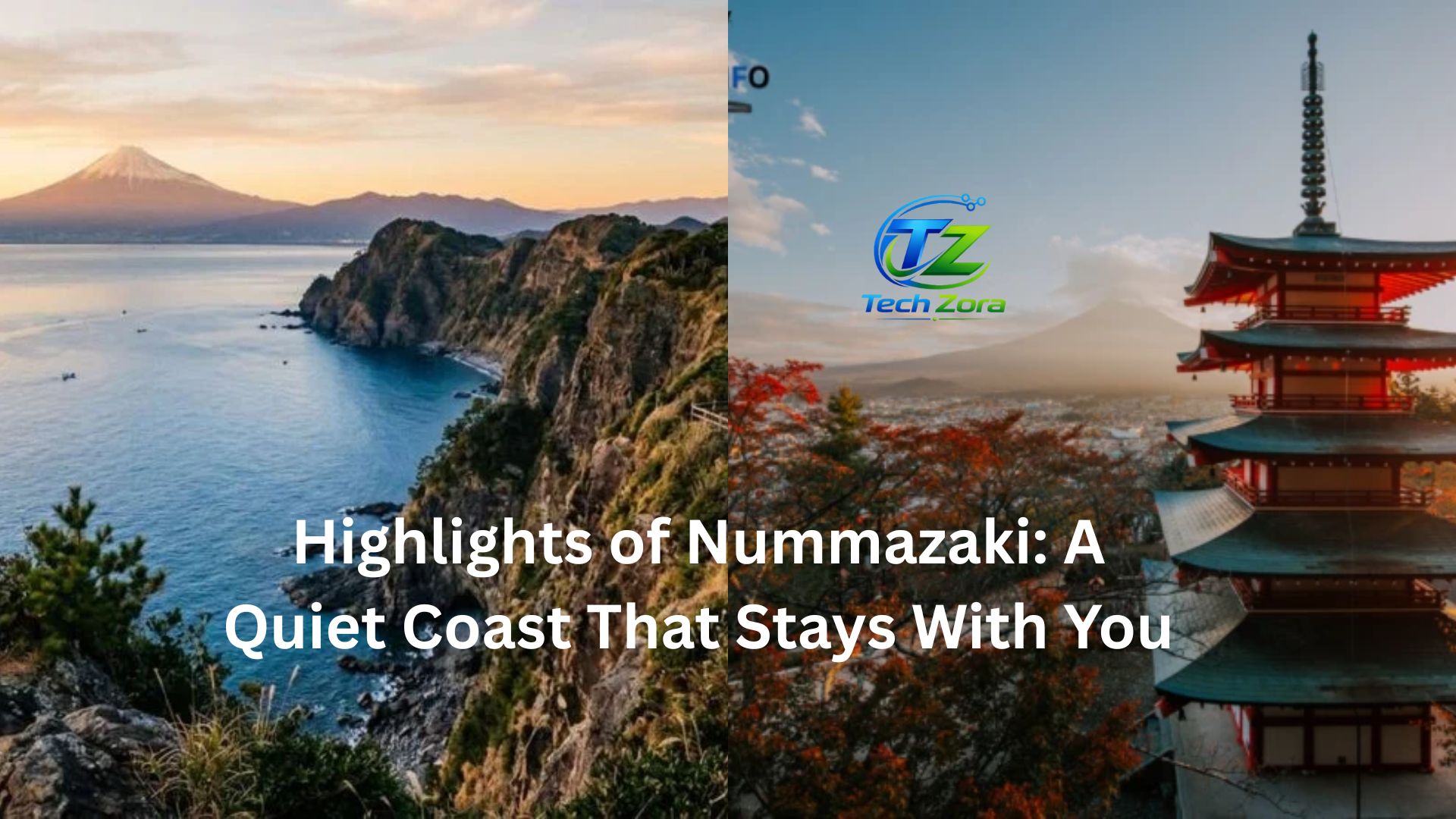
There are places that shout for your attention, and then there are places like Nummazaki. It doesn’t try too hard. No flashing signs, no overbuilt promenades, no crowds fighting for the same photo. Just a stretch of coastline that feels like it’s been left alone on purpose. And somehow, that’s exactly why it works.
If you’ve ever stood somewhere and felt time slow down just a little, you’ll understand Nummazaki almost immediately.
The Kind of Coastline You Don’t Rush
Nummazaki isn’t about ticking off attractions. You don’t “do” it in a checklist kind of way. You wander it.
The shoreline curves gently, with rocky outcrops breaking up the rhythm of the waves. Depending on the tide, you might find small pools trapped between stones—tiny worlds with darting fish and shells clinging stubbornly to the edges. It’s the sort of place where you crouch down without realizing how long you’ve been there.
On a calm day, the sea looks almost flat, like brushed metal under the sun. On windier days, it turns restless, pushing white foam against the rocks. Either way, it holds your attention without demanding it.
You won’t find rows of rental umbrellas or beach bars blasting music. What you will find is space. Space to sit. Space to think. Or just space to do nothing at all.
A Lighthouse That Feels Earned
At the edge of Nummazaki stands a modest lighthouse. It’s not one of those towering, dramatic structures you see in postcards. It’s simpler. Functional. Quietly watching over the coastline.
Getting there involves a short walk, and that’s part of the charm. The path isn’t difficult, but it’s enough to create a small sense of arrival. You notice the wind picking up, the smell of salt getting sharper. By the time you reach the lighthouse, you’ve already slowed down.
Stand there for a minute and you’ll see what makes it special. The view opens wide—sea stretching out in front, land curving behind you. Boats occasionally cut across the horizon, small and deliberate.
It’s not dramatic in a cinematic way. It’s steady. Grounding. The kind of view that doesn’t need a caption.
The Changing Light
Here’s something people don’t always mention: Nummazaki is different depending on when you show up.
Early morning has a softness to it. The light feels diffused, like everything is still waking up. If you’re there at that hour, chances are you’ll have the place almost entirely to yourself. You might see a local fisherman already at work, moving with quiet efficiency.
Midday is brighter, more straightforward. The colors sharpen—the blue of the sea, the pale tones of the rocks, the green patches along the edges. It’s easier to explore then, especially if you’re picking your way across uneven ground.
But sunset is where Nummazaki really settles into itself.
The sky shifts slowly, almost reluctantly. Pale gold turns to orange, then deeper shades that reflect off the water in uneven streaks. The lighthouse becomes a silhouette. The wind often drops just enough to make everything feel suspended.
It’s the kind of sunset where people stop talking without being told to.
Small Details That Stay With You
Big attractions are easy to remember. Nummazaki works differently. It’s the smaller things that stick.
Like the sound of waves hitting rock instead of sand—a sharper, more rhythmic echo. Or the way seabirds hover briefly before committing to a dive. There’s also that mix of textures underfoot: smooth stones, rough patches, the occasional stretch of dry grass.
At one point, you might notice how the air feels slightly cooler near the water, even on a warm day. Step back a few meters, and it shifts again. It’s subtle, but you feel it.
These aren’t things you plan for. They just happen, and somehow they’re what you remember later.
A Place That Invites Slowing Down
Let’s be honest—most travel these days is fast. Even when you’re trying to relax, there’s this quiet pressure to make the most of your time. See more, do more, capture more.
Nummazaki resists that.
There’s not much to “do” in the conventional sense, and that’s exactly the point. You walk, you sit, you look around. Maybe you bring a book and read a few pages before getting distracted by the view. Maybe you don’t even make it past the first page.
If you’re traveling with someone, conversations here tend to drift into more thoughtful territory. There’s something about the setting that makes small talk feel unnecessary.
And if you’re alone, it doesn’t feel lonely. It feels intentional.
Weather Changes Everything
If you only see Nummazaki in perfect weather, you’re getting just one version of it.
A cloudy day gives the place a completely different mood. The colors mute, the horizon blurs slightly, and the whole area feels more introspective. It’s quieter—not just in sound, but in atmosphere.
Then there are those slightly stormy days. Not dangerous, just unsettled. The wind picks up, waves hit harder, and the lighthouse suddenly feels more purposeful. You get a glimpse of why it’s there in the first place.
Oddly enough, those are some of the most memorable moments.
You don’t stay as long, but the experience feels sharper.
Not Built for Crowds—and That’s a Good Thing
One of the best things about Nummazaki is also what keeps it under the radar: it’s not designed for large numbers of visitors.
There aren’t extensive facilities. Parking is limited. Signage is minimal. For some people, that might sound inconvenient. For others, it’s exactly what makes the place special.
It naturally filters the kind of experience you’ll have. The people who come here are usually looking for something quieter. More personal.
You don’t feel like you’re sharing the space with hundreds of others. Even on a busier day, it rarely feels crowded in the usual sense.
A Quick Visit That Turns Longer
Here’s a pattern you’ll probably recognize if you go.
You plan to stop by Nummazaki for a short visit—maybe an hour. Just enough to take a look, stretch your legs, snap a few photos.
Then time stretches.
You sit down “just for a minute” and end up staying much longer. You walk a little further than planned. You double back to see how the light has changed.
Before you know it, that quick stop has taken up a good part of your day.
And it doesn’t feel wasted.
When to Go—and Why It Almost Doesn’t Matter
If you’re trying to pick the “best” time to visit Nummazaki, you could argue for early morning or late afternoon. The light is softer, the atmosphere more relaxed.
But here’s the thing—it works in almost any condition.
Sunny days highlight the natural beauty. Overcast skies add mood. Wind brings energy. Calm weather brings stillness.
Instead of aiming for perfect conditions, it’s better to lean into whatever you get. Nummazaki adapts, and your experience shifts with it.
What You Won’t Find (And Why That Matters)
No big souvenir shops. No guided tour groups lining up for the same angle. No overly curated photo spots.
At first, you might think something’s missing.
Then you realize nothing is.
The absence of those things creates room for something else—your own pace, your own observations, your own version of the place.
It’s a subtle difference, but it changes how you experience everything.
The Quiet After You Leave
Some places impress you immediately and fade just as fast. Nummazaki doesn’t work like that.
It lingers.
You might not think about it right away, but later—maybe that evening, maybe a few days after—you’ll find yourself recalling small moments. The sound of the water. The feel of the wind. The way the horizon looked just before sunset.
It’s not overwhelming. It’s steady.
And that’s what makes it memorable.
Final Thoughts
Nummazaki isn’t trying to compete with bigger, more famous coastal spots. It doesn’t need to.
Its strength is in its simplicity. A stretch of coast, a lighthouse, shifting light, and just enough distance from everything else to let you settle into it.
If you go expecting big attractions, you might miss the point. But if you’re open to slowing down, paying attention, and letting a place unfold at its own pace, Nummazaki has a way of meeting you halfway.
And once it does, it’s surprisingly hard to forget.











Leave a Reply