

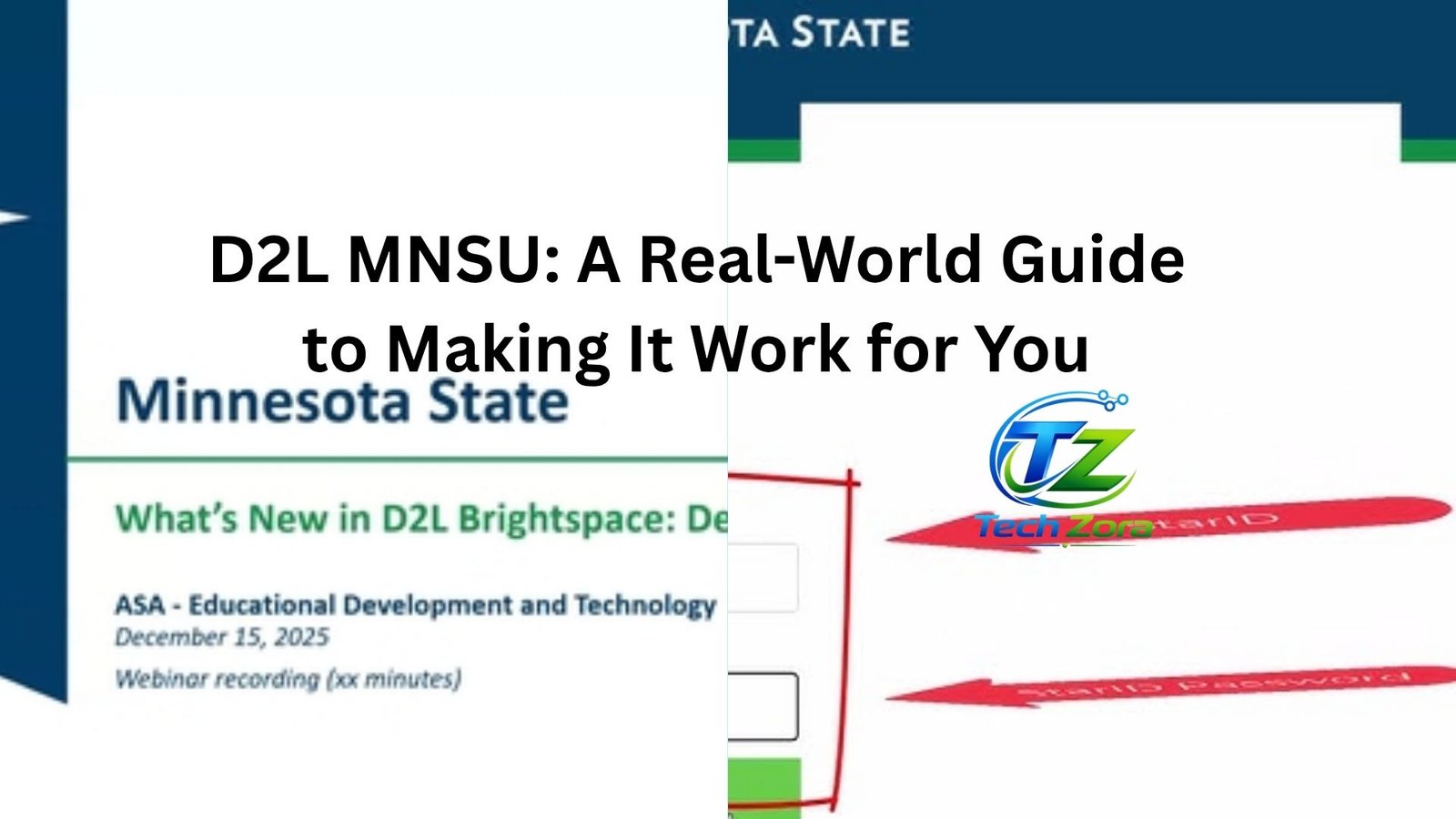
If you’ve spent even a week at Minnesota State University, Mankato, you’ve probably already met D2L. Maybe not formally, but it’s there every day. Quietly running your classes, holding your assignments hostage until midnight, and occasionally reminding you that yes, you did forget that quiz.
D2L MNSU isn’t complicated in theory. It’s just a learning platform. But in practice, it can feel like a mix of helpful assistant and mildly chaotic roommate. Some days it keeps your life organized. Other days you’re clicking through tabs wondering where your professor hid the discussion post.
Let’s make it simpler.
What D2L MNSU Actually Is (Without the Buzzwords)
D2L stands for Desire2Learn. At MNSU, it’s the central hub for pretty much everything academic. Assignments, grades, course materials, announcements, quizzes, discussions. If your class exists, it’s probably inside D2L somewhere.
Think of it like your digital classroom, but stretched out. Instead of sitting in a room for an hour, you’re interacting with your course all week through this platform.
A typical day might look like this: you wake up, check D2L on your phone, notice an announcement about a deadline change, skim a PDF for class, then later upload an assignment at 11:58 PM. That’s the rhythm.
Simple enough. But where people struggle isn’t what it is. It’s how to use it efficiently.
The First Week Confusion Is Normal
Let’s be honest. The first time you log into D2L, it’s not exactly intuitive.
You see multiple course tiles. Each one opens into a slightly different layout. Some professors organize content by week. Others by topic. One might use folders. Another throws everything into one long list.
It’s not you. It’s the system mixed with human creativity.
A freshman might click into a class and think, “Where do I even start?” Meanwhile, a senior just goes straight to the “Content” tab and ignores everything else.
That’s the first lesson: don’t try to understand everything at once. Focus on what you need right now.
Usually, that means three things:
- Content
- Assignments
- Grades
Everything else is secondary.
How Students Actually Use It Day to Day
Here’s what real usage looks like, not the ideal version.
You log in quickly between classes. You’re not exploring features. You’re checking what’s due. Maybe you open one file. Maybe you don’t.
Later, when you sit down to work, you dig deeper. You open modules, download readings, watch recorded lectures. That’s when D2L becomes more than a checklist.
Now, here’s the thing. The students who struggle aren’t less capable. They just don’t build a system around D2L.
Someone who checks it randomly will miss things. Someone who treats it like a routine tool stays ahead.
A simple habit makes a difference: check D2L at the same time every day. Morning or evening. Doesn’t matter. Just make it consistent.
The Hidden Power of the Content Section
If there’s one place worth understanding, it’s the Content tab.
This is where professors structure the course. And it tells you a lot about how the class works.
Some professors build clean weekly modules. You open Week 5, and everything is there: readings, lecture slides, assignments.
Others? Not so much. You might have to dig.
Here’s a practical trick: when the semester starts, spend 10 minutes per class just scanning the Content section. Not studying. Just mapping it in your head.
You’ll start to notice patterns:
- Where assignments are usually placed
- How deadlines are introduced
- Whether the professor updates regularly
That mental map saves you hours later.
Assignments: Where Things Get Real
The Assignments section is where D2L stops being passive and starts demanding something from you.
Uploading files sounds simple. But this is where mistakes happen.
Someone writes an essay, uploads the wrong version, and doesn’t notice until the grade comes back. Or they assume the upload worked without checking confirmation.
It’s small stuff, but it adds up.
A good habit: after submitting, always open the submission again. Make sure it’s the right file. Takes 10 seconds. Saves you stress.
Another thing worth noting is deadlines. D2L shows due dates clearly, but it won’t manage your time for you. It’s easy to see “due Sunday” and think you have plenty of time… until Sunday shows up.
Grades: More Than Just Numbers
The Grades section feels straightforward. You check your score, react emotionally, and move on.
But there’s more value there if you look closer.
You can often see feedback attached to assignments. Comments, rubrics, sometimes even file annotations. That’s where improvement actually happens.
A student who ignores feedback might repeat the same mistakes. Another who reads it carefully starts to adapt.
It’s not about obsessing over grades. It’s about using them as signals.
When Professors Use D2L Differently
Here’s something people don’t always say out loud: D2L isn’t consistent because professors aren’t consistent.
One class might feel polished and structured. Another feels like a scavenger hunt.
You might have a professor who updates announcements daily. Another posts once at the start of the semester and disappears.
This can be frustrating, but it’s also predictable.
Once you notice how a professor uses D2L, you can adjust.
If someone rarely updates announcements, you stop relying on them. If another hides assignments inside modules, you check there first.
You’re not just using D2L. You’re learning how each instructor uses it.
Mobile vs Desktop: What Actually Works
D2L has a mobile experience, and it’s decent for quick checks. Notifications, announcements, maybe reading short content.
But for serious work, desktop is still better.
Uploading assignments, navigating modules, taking quizzes. It’s just smoother on a larger screen.
Picture this: you’re trying to upload a file from your phone, switching between apps, dealing with formatting issues. It works, but it’s not ideal.
Now compare that to sitting at a laptop with everything open. It’s faster, less error-prone.
So the practical approach is simple:
- Use mobile for checking
- Use desktop for doing
Common Mistakes That Keep Happening
Some patterns repeat every semester.
Students ignore D2L for a few days, then feel overwhelmed catching up. Or they assume everything important will be announced, and miss assignments hidden in content modules.
Another big one is waiting until the last minute to submit. Not because of procrastination alone, but because D2L feels like a “quick upload” tool.
Until it doesn’t.
Sometimes files don’t upload. Sometimes the internet slows down. Suddenly that 11:59 PM deadline feels very real.
The fix isn’t complicated. Just give yourself a buffer. Even 30 minutes helps.
Small Habits That Make a Big Difference
You don’t need to master every feature to get good at using D2L.
A few simple habits go a long way.
Checking it daily. Not occasionally. Daily.
Opening each course at least once per session instead of assuming nothing changed.
Reading announcements instead of skimming past them.
Double-checking submissions.
That’s it. Nothing fancy. Just consistent behavior.
Over time, it builds awareness. You stop getting surprised by deadlines. You start anticipating them.
When Things Go Wrong
At some point, something will break. A file won’t upload. A quiz won’t load. A deadline looks wrong.
It happens.
The key is how you respond.
Take a screenshot. Always. It sounds basic, but it gives you proof if there’s an issue.
Then contact your professor. Not hours later. Immediately.
A quick message explaining the problem, with evidence, usually solves things. Waiting too long makes it harder to explain.
Why D2L Feels Bigger Than It Is
Here’s the interesting part. D2L isn’t actually that complex.
What makes it feel overwhelming is everything attached to it. Deadlines, grades, expectations. It becomes the center of your academic life.
So when something feels confusing, it’s not just about navigation. It’s about pressure.
Once you separate those two, it gets easier.
D2L is just a tool. A slightly imperfect one, sure. But still just a tool.
Final Thoughts: Make It Work for You
At the end of the day, D2L MNSU isn’t something you need to master completely. You just need to get comfortable with it.
Treat it like part of your routine, not something you check only when you’re worried. Build small habits around it. Pay attention to how your classes are structured.
And when things feel messy, step back and simplify. What’s due? Where is it? What’s the next action?
That’s all you really need.
Once you get into that rhythm, D2L stops feeling like a confusing system and starts feeling like a quiet, reliable part of your day.









Leave a Reply