
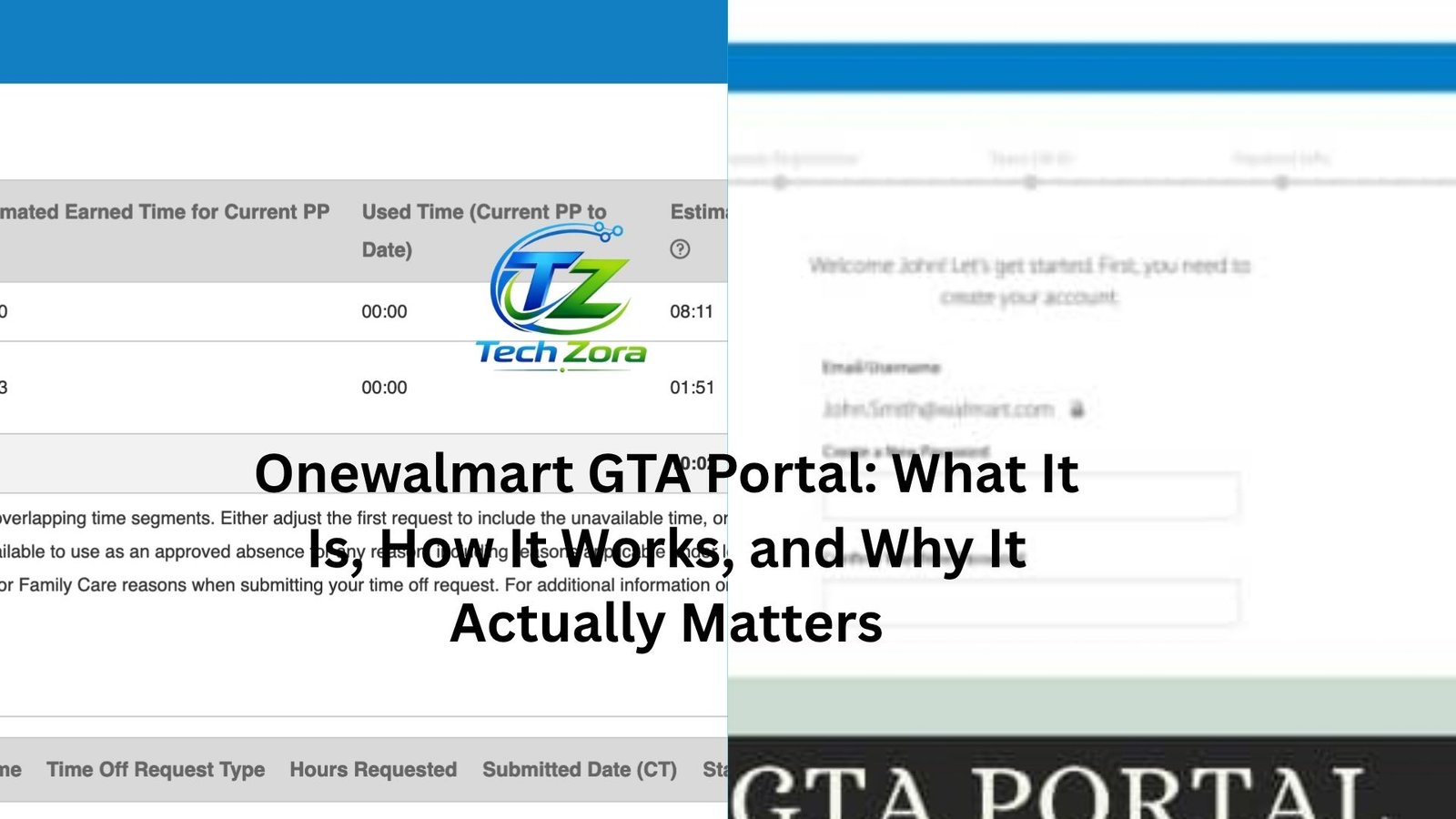

Onewalmart GTA Portal: What It Is, How It Works, and Why It Actually Matters
If you’ve ever worked a shift and later wondered, “Wait… did my hours get recorded correctly?” you’re not alone. That small doubt is exactly where the Onewalmart GTA Portal comes in.
It’s not flashy. It’s not something people talk about outside work. But if you’re part of Walmart, this tool quietly runs a big part of your daily routine.
And once you understand how it works, things get a lot easier.
So, what is the Onewalmart GTA Portal?
The GTA Portal stands for “Global Time and Attendance.” It’s basically Walmart’s system for tracking your work hours, attendance, time off, and exceptions.
Think of it as your digital timecard. But smarter.
Instead of relying on handwritten logs or guesswork, everything gets recorded in one place. Clock-ins, clock-outs, late arrivals, missed punches, PTO requests. It’s all there.
Here’s the thing. Most people only interact with it when something goes wrong. A missing punch. A weird shift total. Maybe a manager asks you to fix something.
But if you use it regularly, you avoid those problems before they start.
Why it matters more than you think
At first glance, it just feels like another system you have to deal with. But your pay depends on it.
That’s not an exaggeration.
Every hour you work is calculated through this system. If something’s off, your paycheck might be off too. Even small errors can add up.
Imagine this:
You forget to clock out one day. The system assumes something based on your schedule. Maybe it cuts your shift short. Maybe it flags an exception. Either way, it needs fixing.
If you don’t notice? You could get paid less than you should.
That’s why understanding the GTA Portal isn’t just helpful. It’s practical.
Getting into the portal without the headache
Access usually happens through the main OneWalmart website. You log in using your work credentials, and from there you can navigate to the GTA Portal.
Simple in theory. Slightly annoying in practice sometimes.
There are moments when the site feels slow or logs you out unexpectedly. That’s normal. It happens.
A small tip that saves time:
If you’re checking something quickly, do it during off-peak hours. Early mornings or later in the evening tend to be smoother.
And always double-check you’re on the correct page before entering details. It sounds obvious, but it prevents mistakes.
Reading your time sheet without confusion
The first time you open your time sheet, it can look a bit cluttered. Numbers, timestamps, labels.
Give it a minute.
Each row represents a day. You’ll see your clock-in and clock-out times, along with total hours worked. If there’s an issue, it’ll usually show as an exception.
Now here’s where people trip up.
An exception doesn’t always mean something is wrong. Sometimes it’s just the system asking for confirmation.
For example:
You clocked in a few minutes early. The system flags it. Not a problem. Just something that might need approval.
Once you get used to how it displays information, it becomes second nature to scan it quickly.
Fixing mistakes before they become problems
Mistakes happen. Everyone forgets to punch in or out at some point.
The GTA Portal lets you fix that. But timing matters.
If you catch the mistake early, it’s easy. You submit a correction or notify your manager. Done.
If you wait too long, things get complicated.
Payroll might already be processed. Adjustments take longer. You may need extra approvals.
A simple habit makes a big difference:
Check your time sheet at least once or twice a week.
It takes less than two minutes. And it saves you from bigger headaches later.
Time-off requests and how they really work
Requesting time off through the portal is straightforward. You choose the dates, select the type of leave, and submit it.
But here’s the part people don’t always realize.
Submitting a request doesn’t mean it’s approved.
Your manager still has to review it. And depending on staffing, timing, or store needs, it might get denied.
That’s why it helps to plan ahead.
Say you’ve got a family event next month. Don’t wait until the last minute. Put in the request early. Give your manager time to work around it.
And keep an eye on the status. The portal will show whether it’s pending, approved, or rejected.
Attendance tracking isn’t just about being present
Attendance in the GTA Portal isn’t only about showing up. It tracks patterns.
Late arrivals. Early departures. Missed punches.
Individually, these might not seem like a big deal. But over time, they create a record.
Let’s be honest. Everyone is late from time to time.
But if it becomes a habit, the system reflects that. And managers notice trends more than one-off situations.
The portal doesn’t judge. It just records.
What truly matters is how you choose to act on that information
A quick scenario that feels familiar
Picture this.
You’ve just finished a long shift. You’re tired. You leave without remembering to clock out.
The next day, you remember. Slight panic.
You check the GTA Portal. There it is. An exception.
Now you have two choices.
Ignore it and hope it fixes itself.
Or handle it right away.
The second option takes maybe a minute. You submit a correction or talk to your manager.
Problem solved.
The first option? It lingers. And it can affect your pay.
It’s a small example, but it shows how the portal fits into everyday work life.
Everyday annoyances and simple ways to handle them
No system is perfect. The GTA Portal has its moments.
Sometimes it’s slow.
Sometimes it logs you out.
Sometimes it feels like it takes too many clicks to do something simple.
That’s just the reality.
The trick is not letting those frustrations stop you from using it.
A few practical habits help:
Check your hours regularly instead of all at once
Fix issues as soon as you see them
Keep communication open with your manager
When you treat it as part of your routine instead of a chore, it becomes easier to manage.
Managers and the GTA Portal
If you’re in a supervisory role, the portal becomes even more important.
You’re not just checking your own hours. You’re reviewing your team’s records.
Approving time-off requests.
Resolving exceptions.
Making sure schedules align with actual hours worked.
It’s a bit like being the final checkpoint.
And here’s where attention to detail matters.
A missed approval or delayed correction can affect someone else’s paycheck. That’s not something you want hanging over you.
The bigger picture behind the system
At a glance, the GTA Portal feels like a simple tracking tool.
But it’s part of a much larger system.
It connects scheduling, payroll, and attendance into one flow. Data moves from one place to another without manual entry.
That reduces errors. Speeds things up. Keeps records consistent.
For a company as large as Walmart, that kind of system isn’t optional. It’s necessary.
And for employees, it means less guesswork and more transparency.
Small habits that make a big difference
You don’t need to master every feature of the portal.
Just focus on a few basics:
Check your time sheet regularly
Fix mistakes quickly
Submit time-off requests early
Pay attention to attendance patterns
That’s it.
These small actions keep everything running smoothly on your end.
Final thoughts
The Onewalmart GTA Portal isn’t exciting. It won’t make your job more fun or your shifts shorter.
But it does something important.
It keeps your time, your pay, and your records accurate.
And that matters more than people realize.
Once you get comfortable with it, you stop seeing it as just another system. It becomes part of how you stay in control of your work life.
Not complicated. Not overwhelming.
Just a tool that works best when you actually use it.