
Onewalmart GTA Portal: What It Is, How It Works, and Why It Actually Matters

If you’ve ever worked a shift and later wondered, “Wait… did my hours get recorded correctly?” you’re not alone. That small doubt is exactly where the Onewalmart GTA Portal comes in.

It’s not flashy. It’s not something people talk about outside work. But if you’re part of Walmart, this tool quietly runs a big part of your daily routine.

And once you understand how it works, things get a lot easier.

So, what is the Onewalmart GTA Portal?

The GTA Portal stands for “Global Time and Attendance.” It’s basically Walmart’s system for tracking your work hours, attendance, time off, and exceptions.

Think of it as your digital timecard. But smarter.

Instead of relying on handwritten logs or guesswork, everything gets recorded in one place. Clock-ins, clock-outs, late arrivals, missed punches, PTO requests. It’s all there.

Here’s the thing. Most people only interact with it when something goes wrong. A missing punch. A weird shift total. Maybe a manager asks you to fix something.

But if you use it regularly, you avoid those problems before they start.

Why it matters more than you think

At first glance, it just feels like another system you have to deal with. But your pay depends on it.

That’s not an exaggeration.

Every hour you work is calculated through this system. If something’s off, your paycheck might be off too. Even small errors can add up.

Imagine this:
You forget to clock out one day. The system assumes something based on your schedule. Maybe it cuts your shift short. Maybe it flags an exception. Either way, it needs fixing.

If you don’t notice? You could get paid less than you should.

That’s why understanding the GTA Portal isn’t just helpful. It’s practical.

Getting into the portal without the headache

Access usually happens through the main OneWalmart website. You log in using your work credentials, and from there you can navigate to the GTA Portal.

Simple in theory. Slightly annoying in practice sometimes.

There are moments when the site feels slow or logs you out unexpectedly. That’s normal. It happens.

A small tip that saves time:
If you’re checking something quickly, do it during off-peak hours. Early mornings or later in the evening tend to be smoother.

And always double-check you’re on the correct page before entering details. It sounds obvious, but it prevents mistakes.

Reading your time sheet without confusion

The first time you open your time sheet, it can look a bit cluttered. Numbers, timestamps, labels.

Give it a minute.

Each row represents a day. You’ll see your clock-in and clock-out times, along with total hours worked. If there’s an issue, it’ll usually show as an exception.

Now here’s where people trip up.

An exception doesn’t always mean something is wrong. Sometimes it’s just the system asking for confirmation.

For example:
You clocked in a few minutes early. The system flags it. Not a problem. Just something that might need approval.

Once you get used to how it displays information, it becomes second nature to scan it quickly.

Fixing mistakes before they become problems

Mistakes happen. Everyone forgets to punch in or out at some point.

The GTA Portal lets you fix that. But timing matters.

If you catch the mistake early, it’s easy. You submit a correction or notify your manager. Done.

If you wait too long, things get complicated.

Payroll might already be processed. Adjustments take longer. You may need extra approvals.

A simple habit makes a big difference:
Check your time sheet at least once or twice a week.

It takes less than two minutes. And it saves you from bigger headaches later.

Time-off requests and how they really work

Requesting time off through the portal is straightforward. You choose the dates, select the type of leave, and submit it.

But here’s the part people don’t always realize.

Submitting a request doesn’t mean it’s approved.

Your manager still has to review it. And depending on staffing, timing, or store needs, it might get denied.

That’s why it helps to plan ahead.

Say you’ve got a family event next month. Don’t wait until the last minute. Put in the request early. Give your manager time to work around it.

And keep an eye on the status. The portal will show whether it’s pending, approved, or rejected.

Attendance tracking isn’t just about being present

Attendance in the GTA Portal isn’t only about showing up. It tracks patterns.

Late arrivals. Early departures. Missed punches.

Individually, these might not seem like a big deal. But over time, they create a record.

Let’s be honest. Everyone is late from time to time.

But if it becomes a habit, the system reflects that. And managers notice trends more than one-off situations.

The portal doesn’t judge. It just records.

What truly matters is how you choose to act on that information

A quick scenario that feels familiar

Picture this.

You’ve just finished a long shift. You’re tired. You leave without remembering to clock out.

The next day, you remember. Slight panic.

You check the GTA Portal. There it is. An exception.

Now you have two choices.

Ignore it and hope it fixes itself.
Or handle it right away.

The second option takes maybe a minute. You submit a correction or talk to your manager.

Problem solved.

The first option? It lingers. And it can affect your pay.

It’s a small example, but it shows how the portal fits into everyday work life.

Everyday annoyances and simple ways to handle them

No system is perfect. The GTA Portal has its moments.

Sometimes it’s slow.
Sometimes it logs you out.
Sometimes it feels like it takes too many clicks to do something simple.

That’s just the reality.

The trick is not letting those frustrations stop you from using it.

A few practical habits help:

Check your hours regularly instead of all at once
Fix issues as soon as you see them
Keep communication open with your manager

When you treat it as part of your routine instead of a chore, it becomes easier to manage.

Managers and the GTA Portal

If you’re in a supervisory role, the portal becomes even more important.

You’re not just checking your own hours. You’re reviewing your team’s records.

Approving time-off requests.
Resolving exceptions.
Making sure schedules align with actual hours worked.

It’s a bit like being the final checkpoint.

And here’s where attention to detail matters.

A missed approval or delayed correction can affect someone else’s paycheck. That’s not something you want hanging over you.

The bigger picture behind the system

At a glance, the GTA Portal feels like a simple tracking tool.

But it’s part of a much larger system.

It connects scheduling, payroll, and attendance into one flow. Data moves from one place to another without manual entry.

That reduces errors. Speeds things up. Keeps records consistent.

For a company as large as Walmart, that kind of system isn’t optional. It’s necessary.

And for employees, it means less guesswork and more transparency.

Small habits that make a big difference

You don’t need to master every feature of the portal.

Just focus on a few basics:

Check your time sheet regularly
Fix mistakes quickly
Submit time-off requests early
Pay attention to attendance patterns

That’s it.

These small actions keep everything running smoothly on your end.

Final thoughts

The Onewalmart GTA Portal isn’t exciting. It won’t make your job more fun or your shifts shorter.

But it does something important.

It keeps your time, your pay, and your records accurate.

And that matters more than people realize.

Once you get comfortable with it, you stop seeing it as just another system. It becomes part of how you stay in control of your work life.

Not complicated. Not overwhelming.

Just a tool that works best when you actually use it.
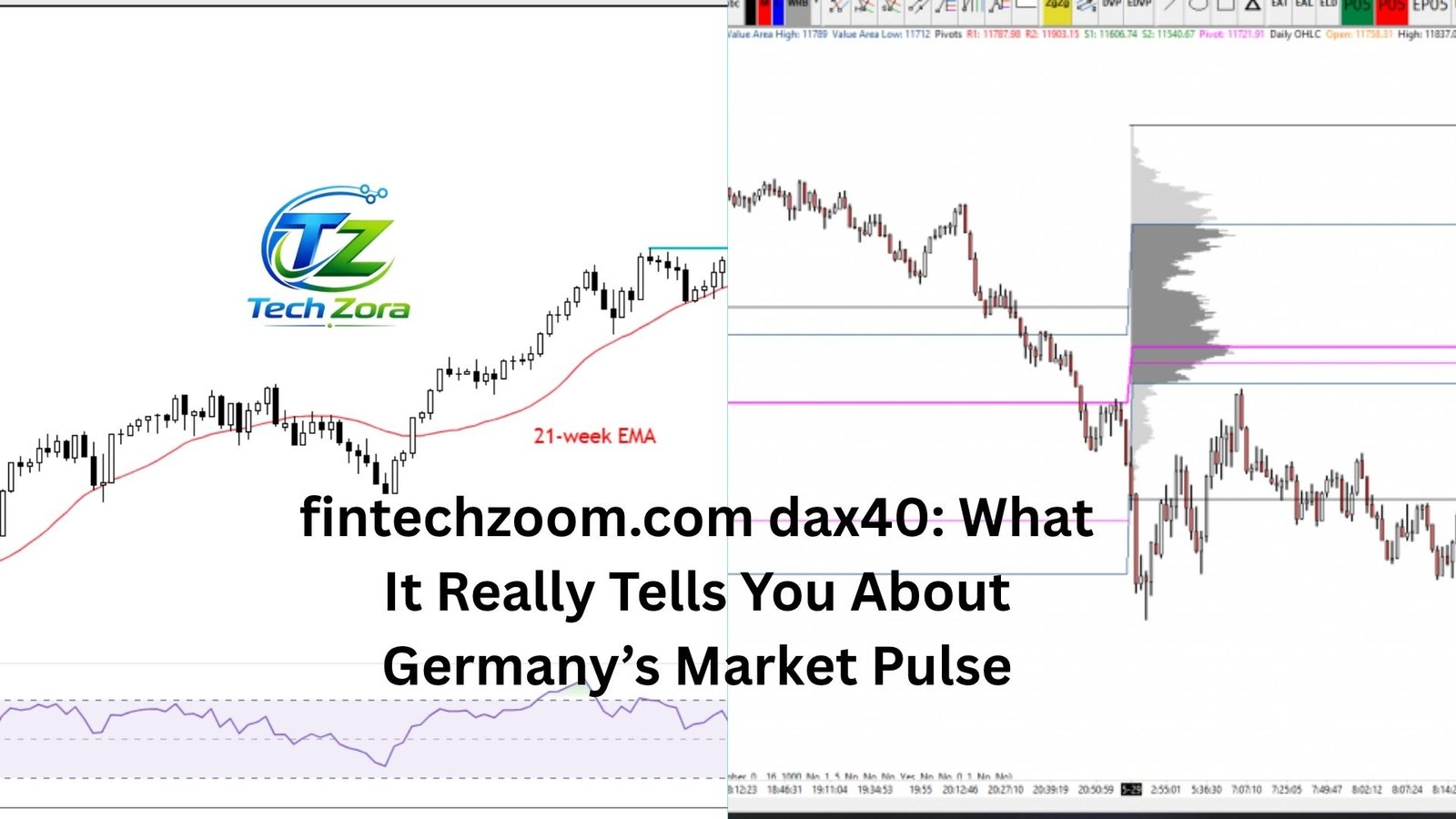
fintechzoom.com dax40: What It Really Tells You About Germany’s Market Pulse

There’s something oddly satisfying about watching a major index move in real time. Numbers tick up, dip down, headlines follow, and suddenly everyone has an opinion. If you’ve spent any time browsing fintechzoom.com dax40 coverage, you’ve probably noticed it’s more than just charts and percentages. It’s a window into how Europe’s largest economy is feeling—right now, not last quarter.

The DAX 40 isn’t just a list of companies. It’s a mood ring for Germany’s industrial backbone. And the way platforms like FintechZoom present it? That shapes how everyday investors interpret what’s happening under the surface.

Let’s unpack that a bit.

Why the DAX 40 Still Matters (More Than People Admit)

You’ll hear a lot about the S&P 500 or Nasdaq. Fair enough. But brushing off the DAX 40 is a mistake, especially if you care about global markets.

Germany isn’t just another economy—it’s an export machine. Cars, chemicals, machinery, pharmaceuticals. When companies in the DAX move, they’re reacting to global demand, supply chain shifts, energy prices, and geopolitical tension. It’s all baked in.

Think about it this way. If BMW or Siemens starts sliding, it’s rarely about just one bad earnings report. It could signal slowing demand in China, rising costs in Europe, or uncertainty in global trade. That’s useful information, even if you’re sitting miles away and trading U.S. stocks.

FintechZoom’s DAX 40 coverage makes this connection easier to see. It doesn’t just show movement—it frames it.

fintechzoom.com dax40: More Than Just a Dashboard

Here’s the thing. A lot of financial websites throw numbers at you and call it insight. FintechZoom tries to bridge that gap.

When you check their DAX 40 section, you’re not just seeing index levels. You’re getting context—what’s driving the movement, which sectors are pushing hardest, and where the pressure points are.

Imagine this: it’s a Tuesday morning, you open your laptop, and the DAX is down 1.3%. That alone doesn’t mean much. But then you see energy stocks dropping, industrials following, and commentary pointing to rising gas prices in Europe. Now it clicks. It’s not random.

That’s where platforms like FintechZoom earn their keep. They help translate movement into meaning.

The Shift from DAX 30 to DAX 40 Changed the Game

Not long ago, the DAX was made up of 30 companies. Expanding to 40 wasn’t just a cosmetic change—it reshaped the index.

It brought in more diversification. More sectors. More representation of Germany’s evolving economy, especially in tech and healthcare.

But it also made the index a bit more complex.

With more players, movements can feel less predictable. A surge in one sector can get offset by weakness in another. For casual investors, that can be confusing.

FintechZoom’s breakdowns tend to smooth that complexity out. They highlight which companies are actually moving the needle. Because let’s be honest—most days, a handful of stocks are doing the heavy lifting while others barely move.

Reading Between the Lines of Daily Movements

It’s easy to get caught up in daily swings. Green day, red day, repeat. But the real value comes from stepping back and asking why.

Let’s say the DAX climbs steadily over a week. Sounds bullish, right? Maybe. But what if that growth is driven by just two or three large exporters benefiting from currency shifts?

Now flip it. The index dips, but mid-sized companies are quietly gaining strength. That’s a different story entirely.

FintechZoom’s coverage often hints at these nuances. Not in a flashy way, but in how they frame sector performance and highlight underlying drivers.

And that matters. Because surface-level data can mislead you.

How Global Events Echo Through the DAX

The DAX reacts fast. Sometimes faster than you’d expect.

A policy change in the U.S.? It shows up. Tension in Eastern Europe? You’ll see it. A slowdown in China? It’s already priced in before most headlines catch up.

This is where following fintechzoom.com dax40 updates can give you an edge—not because it predicts the future, but because it reflects how markets are digesting news in real time.

Picture a small investor checking the markets over coffee. They see the DAX dipping after a central bank announcement. That’s not just a European story—it’s a signal about global liquidity tightening.

These ripples connect.

The Quiet Influence of Sector Weighting

Here’s something people don’t always consider: not all companies in the DAX matter equally.

A heavyweight like SAP or Allianz carries far more influence than a smaller entrant. So when those giants move, they can drag the entire index with them.

This creates an illusion sometimes.

You might think the market is strong because the DAX is up, but in reality, it’s being propped up by a few dominant players. Or the opposite—the index looks weak while most companies are actually doing fine.

FintechZoom tends to call this out subtly by focusing on top movers. It’s a small detail, but it changes how you interpret the numbers.

Retail Investors Are Watching Differently Now

A few years ago, tracking something like the DAX felt like a professional’s game. Now? Not so much.

Retail investors are more informed, more connected, and frankly, more curious. They’re not just checking prices—they’re trying to understand the story.

And platforms like FintechZoom fit into that shift.

Instead of dry reporting, the content leans toward explanation. Why something is happening. What it might mean. Where to pay attention next.

That doesn’t make it perfect. No platform gets everything right. But it does make it more usable for someone who isn’t glued to a Bloomberg terminal all day.

When the DAX Sends Mixed Signals

Some days, the DAX feels… contradictory.

You’ll see strong economic data out of Germany, but the index drops. Or weak numbers, and the market rallies anyway.

That’s not a glitch. That’s expectations at work.

Markets don’t react to news—they react to surprises. If investors already expected strong data, good results won’t move the needle much. But a slight miss? That can trigger a sell-off.

FintechZoom’s commentary often leans into this idea without overcomplicating it. It’s a reminder that context matters more than headlines.

Using fintechzoom.com dax40 as a Practical Tool

Let’s bring this down to earth.

Say you’re considering investing in a European ETF. You’re not going to analyze 40 companies individually. That’s just not realistic.

But you can watch how the DAX behaves over time. You can follow fintechzoom.com dax40 updates to see patterns—how it reacts to interest rate changes, how it behaves during earnings season, how sensitive it is to global shocks.

Over time, you start to build intuition.

You’ll notice things like:

  • The index tends to wobble when energy prices spike
  • Export-heavy stocks react quickly to currency shifts
  • Financial firms move with interest rate expectations

You don’t need a spreadsheet for that. Just consistent observation.

The Subtle Role of Sentiment

Numbers tell one story. Sentiment tells another.

Sometimes the DAX moves not because something concrete happened, but because investors feel uncertain—or optimistic.

That’s harder to measure, but you can sense it in how markets react.

FintechZoom’s tone occasionally reflects this. When coverage shifts from confident to cautious, or from neutral to slightly concerned, it’s often mirroring broader market sentiment.

It’s not scientific, but it’s useful.

Where People Get It Wrong

Let’s be honest—most mistakes don’t come from lack of information. They come from misreading it.

A common one? Assuming the DAX represents “Europe as a whole.” It doesn’t. It’s heavily tilted toward Germany’s industrial and export sectors.

Another? Treating short-term movements as long-term trends.

You see the index drop for three days and assume something is fundamentally broken. In reality, it could just be a temporary reaction to external pressure.

FintechZoom’s updates can help avoid that trap, but only if you read them with a bit of skepticism and patience.

The Bigger Picture Behind the Numbers

At the end of the day, fintechzoom.com dax40 coverage isn’t just about tracking an index. It’s about understanding a piece of the global financial puzzle.

The DAX reflects how companies are coping with real-world challenges—energy costs, supply chains, regulation, consumer demand. It’s all there, hidden behind price movements.

And while no single platform gives you the full picture, having a clear, contextual view helps.

Because markets aren’t random. They’re reactions. Sometimes messy, sometimes overblown, but rarely meaningless.

Final Thoughts

If you check the DAX casually, it’s just another number. Up or down, green or red.

But if you follow it with a bit more attention—especially through something like fintechzoom.com dax40—it starts to tell a story.

Not a perfect one. Not always a clear one. But a useful one.

And once you start seeing those patterns, even loosely, the market feels less like noise and more like a conversation.

Hotels Travel Tweaks That Actually Make Your Stay Better

There’s a moment in every trip when you realize the hotel can either make everything smoother… or quietly ruin the vibe. It’s rarely about five-star vs budget. It’s the small things. The tiny decisions you make before and during your stay.

Over time, you start noticing patterns. What works. What doesn’t. What you wish you’d done differently.

These are the tweaks that stick. The ones that turn an average stay into something that just feels easy.

Booking smarter, not just cheaper

Let’s start before you even arrive.

Most people hunt for the lowest price and call it a win. But cheap can get expensive in sneaky ways. A hotel far from where you actually need to be? You’ll pay in time and transport. A “great deal” with no breakfast? You’ll feel it every morning.

Here’s the thing. Location beats price more often than people admit.

If you’re in a city for three days, staying central might cost a bit more upfront, but it saves energy. You walk more. You waste less time figuring things out. You feel part of the place instead of orbiting it.

Also, don’t ignore timing. Prices shift constantly. Checking the same hotel a few days apart can give completely different results. If your plans are flexible, that alone can change everything.

And one small move that works surprisingly well: email the hotel directly after booking through a platform. Just a short message. Mention your stay, ask politely if any upgrades are available. It’s not guaranteed, but you’d be surprised how often you get a better room just for asking like a normal human.

Check-in isn’t just a formality

Most people treat check-in like a transaction. ID, signature, key, done.

That’s a missed opportunity.

The person at the desk can quietly shape your stay. Room placement, noise levels, small perks. All of it flows through them.

You don’t need to charm anyone or fake friendliness. Just be present. Ask one or two simple questions. Something like, “Is there a quieter side of the hotel?” or “Any rooms you’d personally recommend?”

It changes the tone instantly.

I once checked into a busy hotel after a long flight. Instead of rushing through, I asked if there was any chance of a late checkout later in the week. The receptionist noted it down. Two days later, I got an extra three hours without even asking again.

Small conversation. Real payoff.

The room itself: don’t settle too fast

You walk in. Drop your bag. Sit down. That’s the usual pattern.

Pause for a second.

Take two minutes to actually look at the room. Check the basics. Does the AC work properly? Is there noise from outside or a nearby elevator? Is the Wi-Fi usable?

Because here’s the reality: it’s much easier to switch rooms in the first 10 minutes than after you’ve unpacked.

People hesitate. They don’t want to “cause trouble.” But hotels expect this. It’s normal.

I’ve changed rooms because of a flickering light, a strange smell, even just a window facing a wall. Every time, it felt awkward for about 30 seconds… and then completely worth it.

Your setup matters more than you think

Once you decide to stay in the room, set it up in a way that works for you.

This sounds minor. It isn’t.

Move things around. Shift the chair closer to the outlet. Clear a space for your essentials. Adjust lighting. These tiny changes can make the room feel less like a temporary stop and more like your space.

If you’re staying more than one night, unpack a little. Not everything. Just enough so you’re not living out of a suitcase like you’re in transit.

There’s a difference between staying somewhere and actually settling in. You feel it.

Sleep is where most stays go wrong

Bad sleep ruins good trips. Simple as that.

And hotels aren’t always great at it.

The curtains don’t fully block light. The hallway noise leaks in. The mattress feels different. It adds up.

So you adjust.

If there’s light, use clips or even a hanger to seal the curtains. If there’s noise, use white noise from your phone or a simple app. Earplugs are a small thing to carry, but they solve a lot of problems.

Temperature matters too. People often ignore it. Set it slightly cooler than you think you need. Hotels tend to trap heat.

One night of proper rest changes how you experience everything the next day. Food tastes better. Walking feels easier. You’re less irritated by small things.

Worth the effort.

Housekeeping: use it your way

Some people skip housekeeping entirely. Others rely on it heavily.

There’s no rule here. But there is a smarter way to think about it.

You don’t have to accept the default routine.

Need fresh towels but don’t want the room cleaned? Ask for just that. Want privacy for a couple of days? Put the sign up and call only when needed.

Hotels are more flexible than they seem. You just have to be specific.

A friend of mine always asks for extra water bottles on day one. Not daily. Just once. It saves repeated calls and small interruptions later.

Another small tweak: keep your valuables organized in one place. It reduces that slight tension some people feel when someone else enters the room.

Food choices that don’t slow you down

Hotel breakfasts can be hit or miss.

Sometimes they’re great. Sometimes they’re expensive for what you get.

Instead of defaulting to it, think about your day.

If you have an early start, hotel breakfast is convenient. No thinking required. But if your mornings are slower, stepping outside often gives you better food and a more local feel.

I remember staying at a hotel where breakfast cost almost as much as a decent lunch. A five-minute walk led to a small café with fresher food, better coffee, and half the price.

It became part of the routine. Something to look forward to.

Room service falls into a similar category. It’s useful when you’re tired or arriving late. But relying on it too much can make the trip feel oddly disconnected.

Balance is the key.

The front desk is more useful than you think

People either ignore the front desk or only go there when something’s wrong.

That’s a mistake.

They often know the area better than any app. Not just the popular spots, but the practical details. Where to get something late at night. Which nearby place is actually worth your time.

But the way you ask matters.

Instead of saying, “Any good restaurants?” try something like, “Where would you go if you had one free evening nearby?”

It shifts the answer. You get something more personal, less scripted.

I’ve gotten some of the best local tips this way. Places I wouldn’t have found otherwise.

Timing your check-out strategically

Check-out feels like the end. But you still have control here.

If your departure is later in the day, ask about luggage storage. Most hotels offer it, but not everyone uses it.

This one tweak opens up your last day. You’re not dragging a suitcase around. You can explore properly, grab a relaxed meal, or even just walk without feeling rushed.

Late checkout is another option worth asking for, even if it’s not guaranteed. Sometimes it’s free. Sometimes there’s a small fee. Either way, it can turn a stressful exit into a calm one.

There’s something underrated about leaving a place without rushing.

Small habits that make everything smoother

Over time, you build little habits that quietly improve every stay.

Charging all your devices overnight in one spot so you don’t forget anything. Keeping a mental checklist before leaving the room. Taking a quick photo of where you placed important items.

These aren’t big strategies. They’re just practical.

I always do one quick sweep before checkout. Bathroom, bedside table, outlets. It takes 30 seconds and has saved me from leaving chargers behind more times than I’d like to admit.

Another simple one: carry a small reusable bag. It helps with everything from laundry to quick grocery runs.

These things don’t feel important until they suddenly are.

When things go wrong, handle it early

No matter how well you plan, something will go off at some point.

A noisy neighbor. A maintenance issue. A booking mix-up.

The worst thing you can do is wait.

Address it early, calmly, and clearly. Hotels are usually willing to fix issues, but only if they know about them while there’s still time to act.

There’s a difference between complaining and solving a problem. Stick to the second approach.

I once had a room with a constant humming noise from some nearby equipment. Instead of tolerating it, I mentioned it the first evening. Within 15 minutes, I had a different room.

Problem gone. Trip saved.

Leaving on a good note

The end of a stay often feels rushed. Packing, checking times, arranging transport.

But it’s also a chance to close things well.

If the stay was good, say so. A simple thank you at the front desk goes a long way. These are real people, not just part of the system.

If something wasn’t great, mention it politely. Not as a complaint, but as feedback. It’s more likely to be taken seriously that way.

And one last quiet habit: check your bill carefully. Mistakes happen. It’s easier to fix them before you leave than after.

The real takeaway

Hotels aren’t just places you sleep. They shape your experience more than you think.

And the difference usually isn’t about luxury. It’s about attention. Small decisions. A bit of awareness.

You don’t need to overthink it. Just adjust a few things. Ask a little more. Notice a bit more.

That’s where the comfort comes from.

That’s where the trip starts to feel like yours.